Screaming Back at the Void: Why Heavy Music Is the Only Therapist Gen Z Actually Trusts

There's a moment in every heavy music fan's life — usually somewhere between sixteen and twenty-two, usually at 2am, usually alone — when a song grabs you by the throat and tells you exactly how you feel before you even knew you felt it. Not in the polished, radio-friendly way. Not with a verse-chorus-verse safety net. In the ugly, unfiltered, this-is-going-to-hurt way. That moment? That's not escapism. That's diagnosis.
And for a generation that grew up being told to breathe through it, to download Calm, to practice gratitude, to reframe their trauma as a growth opportunity — that moment of raw sonic recognition might be the closest thing to genuine mental healthcare they've ever experienced.
The Wellness Industrial Complex Failed First
Let's be real about what Gen Z inherited. Record levels of anxiety and depression. A pandemic that stripped away formative social experiences. A mental health system so underfunded and overloaded that the average wait time to see a psychiatrist in the US stretches into months. And into that vacuum rushed an entire wellness industry selling the aesthetic of healing without the substance of it.
Crystal sets. Manifestation journals. Influencers with perfect skin telling you that your suffering is just a mindset problem. The message, dressed up in soft fonts and earthy tones, was essentially this: your pain is manageable if you just consume the right products.
Heavy music said something different. It said your pain is real, it is enormous, and we are going to sit inside it with you and make it as loud as it deserves to be.
That's not a small thing. That's everything.
The Fan Stories No Algorithm Will Boost
Spend five minutes in any active metal or hardcore Discord server and you'll find them — the stories that don't get the wellness industry's press coverage. Kids from rural Ohio who found Knocked Loose before they found a single mental health resource in their county. Teenagers in the South whose churches had no language for depression but whose local punk scene had all the language in the world. College students who made it through their worst semesters by playing the same Converge record on repeat until the walls of their dorm rooms felt less like a cage.
One 21-year-old from outside Nashville described her relationship with heavy music this way: "Therapy has a waiting list. My parents think depression is a character flaw. But I put on Code Orange and I feel like someone understands exactly how wrong everything feels. Not in a sad way. In a 'you are not alone and you are not crazy' way."
That's not anecdotal noise. That's a pattern. And it's one that artists in the space have been deliberately feeding for years.
Artists Who Are Done Pretending the Pain Isn't the Point
The most interesting thing happening in heavy music right now isn't a new subgenre or a production trend. It's the explicit, unapologetic centering of mental health as subject matter — not as a marketing angle, but as the actual core of the work.
Bands like Spiritbox, Underoath, and Knocked Loose aren't burying the emotional content under layers of genre posturing. They're leading with it. Frontpeople are talking openly in interviews about their own struggles with anxiety, dissociation, and depression, and then encoding those struggles into music that doesn't soften the edges for mainstream palatability.
There's an authenticity to that exchange that no wellness app can replicate. When a vocalist screams about feeling like a stranger inside their own body, they're not performing vulnerability for engagement metrics. They're reporting from inside the experience. And the fans know the difference.
Hardcore and metalcore scenes in particular have developed their own internal language around mental health — one that's blunt and unromantic and completely divorced from the inspirational poster aesthetic. Suffering isn't reframed as a journey. It's acknowledged as suffering. That honesty is, paradoxically, more healing than most of what the self-help industrial complex is selling.
The Pit as Communal Ritual
Here's what the mental health discourse almost always misses when it talks about music as therapy: the physical dimension of heavy music isn't incidental. It's central.
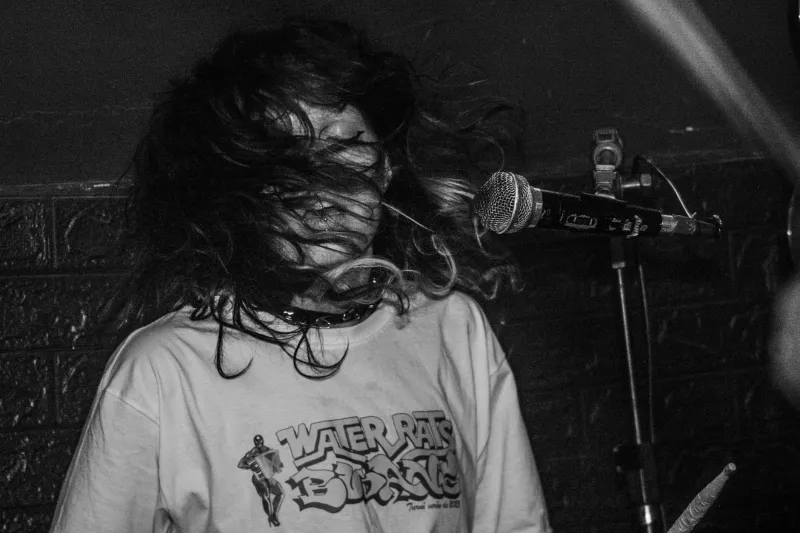
The mosh pit is not chaos. It's a negotiated communal space where people can be physically intense without social consequence, where strangers help each other up off the floor, where the rules of polite society are suspended and replaced by something rawer and, in many ways, kinder. You fall, someone grabs you. You lose yourself in the noise, and the noise holds you.
For a generation that came of age during a pandemic that made physical community dangerous and then impossible, that experience of safe collective physical release is genuinely therapeutic in ways that are hard to quantify but impossible to dismiss.
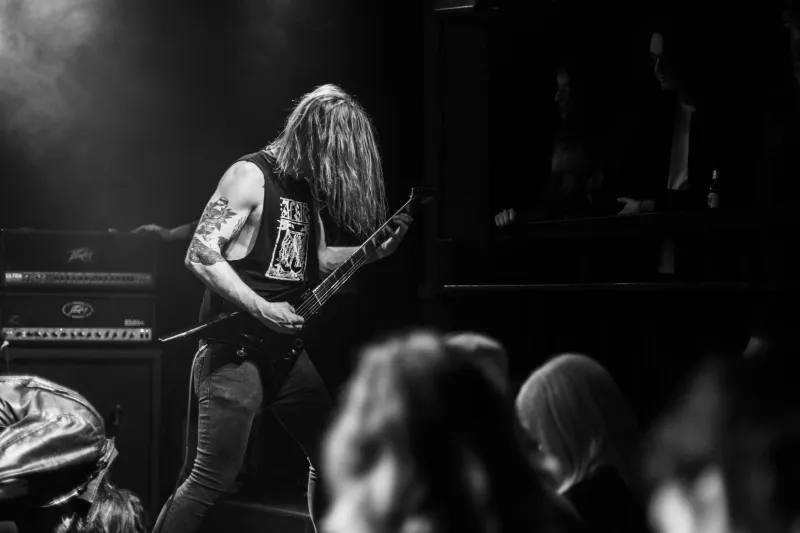
Shows have become something closer to church for a lot of Gen Z heavy music fans — not in the religious sense, but in the sense of a shared ritual that provides meaning, belonging, and catharsis in a world that offers precious little of any of those things.
This Isn't a Substitute. It's the Real Thing.
The easy dismissal of heavy music as a mental health resource is that it's just a coping mechanism, not real treatment. And sure — nobody's saying a Portrayal of Guilt record replaces medication or professional intervention when those things are needed and accessible.
But let's interrogate that hierarchy a little. Professional mental healthcare in the US is inaccessible for a significant chunk of the population due to cost, wait times, and geographic availability. The wellness industry is selling expensive products with questionable efficacy. And heavy music — loud, free on Spotify, available at a $15 club show or a basement in your city — is providing genuine community, emotional recognition, and cathartic release to millions of young people who have nowhere else to turn.
That's not nothing. That's not even close to nothing.
The genres we cover here at Suicidal Hearts have always known that the loudest music is often the most honest music. Gen Z didn't discover that. They just refused to apologize for it. And in a culture that keeps trying to sell them a quieter, more monetizable version of healing, that refusal is its own kind of radical act.
Scream back at the void. It's been screaming at you long enough.