The Weirder the Better: Why Gen Z Is Turning Underground Obscurity Into a Blood Sport
I want to tell you about a thread I fell into on Reddit last month. It was on r/Deathmetal, and somebody had posted asking for recommendations for bands with under 500 monthly Spotify listeners. Not good bands. Not technically impressive bands. Bands with under 500 listeners — that was the specific, stated criterion for quality.
The thread had over 400 comments.
This is where we are right now. A generation of listeners has collectively decided that the size of an audience is inversely correlated with artistic legitimacy, and they are pursuing the most unmarketable, difficult-to-find, aggressively uncommercial music on earth with the same energy previous generations brought to record store crate-digging. Except faster. And with more gatekeeping.
The Streaming Era's Unexpected Backlash
To understand why this is happening, you have to understand what streaming did to music discovery — and I mean really did to it, not the press release version.
Spotify and Apple Music promised infinite access. Every record ever made, available instantly, for the price of a couple of coffees a month. That sounds incredible until you realize what infinite access actually produces: algorithmic monoculture. The same 40 bands cycling through the same editorial playlists, optimized for skip rate and completion percentage, surfaced to audiences sorted into demographic buckets by a machine that has never once felt anything.
For a generation that grew up watching every aspect of their cultural life get flattened into content — their music, their fashion, their politics, their humor — the reaction was almost inevitable. If the algorithm is pushing it, it's compromised. If it has a million listeners, it's been co-opted. If it showed up in a Netflix trailer, it's dead.
The only music that can't be tainted by the machine is music the machine can't find.
Discord, Reddit, and the Architecture of Obscurity
The infrastructure for this kind of deep-cut hunting is genuinely impressive, in a chaotic, anarchic way that the music industry has absolutely no idea what to do with.
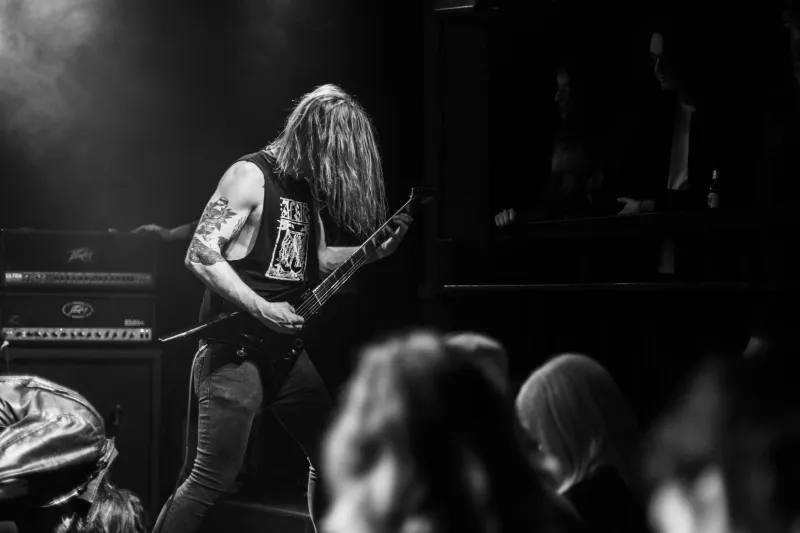
Discord servers dedicated to subgenres so niche they barely have names — we're talking stuff like "war metal adjacent atmospheric black," or "slam death with jazz influence" — function as both libraries and gatekeeping chambers. Membership sometimes requires demonstrating existing knowledge before you can even access the recommendation channels. Show up asking about Cannibal Corpse and you'll get laughed out of the server. Show up with a deep cut from a Finnish band that released one demo tape in 2003 and never played a show, and suddenly you're somebody.
Reddit communities like r/DepressiveBlackMetalMusic, r/Grindcore, and dozens of smaller subreddits operate on similar social logic. The posts that get traction aren't "here's a great song" — they're "here's a band that only exists on one obscure blog post from 2009 and their sole recording was a CDR sold at one show in Portland." The rarer the artifact, the higher the social currency.
And then there's TikTok, which is doing something genuinely weird and interesting to all of this. The platform's algorithm occasionally surfaces brutally heavy, deeply obscure music to audiences that have zero context for it — and the comment sections on those videos are fascinating sociological documents. Half the comments are people experiencing genuine shock and curiosity. The other half are longtime fans performing possessive outrage that their thing got discovered. Both groups are, in their own way, completely sincere.
Authenticity Is the New Luxury Good
Here's my actual take on what's driving this, and it's not as cynical as it might sound: Gen Z is conducting a pretty sophisticated search for authenticity in a media environment that has made authenticity almost impossible to verify.
When every major artist has a PR team, a brand deal, and a carefully managed social media presence, the signals we used to use to identify genuine artistic intent are completely scrambled. Rawness can be performed. Rebellion can be marketed. Even the aesthetic of underground music — the lo-fi production, the DIY artwork, the confrontational imagery — has been commodified and sold back to mainstream audiences by fashion brands and ad agencies.
In that context, a brutal death metal band with 300 Spotify listeners isn't just obscure — it's provably uncommercial. It is, by definition, something that nobody with a financial stake in mass appeal would have created or promoted. That's not nothing. That's actually a meaningful signal in an environment where every other signal has been corrupted.
The listener who finds that band isn't just collecting a cool record. They're collecting evidence that something real still exists.
The Gatekeeping Problem (It's Real, But It's Complicated)
Let's be honest about the dark side of this, because there is one. The culture of obscurity-as-status creates some genuinely toxic dynamics.
When discovering a band becomes a competitive sport, the music itself can become secondary to the social performance around it. The point stops being "this is incredible, you should hear it" and becomes "I heard this before you, which makes me more legitimate than you." That's a poisonous way to relate to art, and it actively hurts the artists involved — because a band with 300 listeners that suddenly gets 3,000 listeners after a Reddit thread isn't being sold out, they're just getting heard.
There's also a real exclusivity problem that maps uncomfortably onto existing inequalities. Deep music knowledge requires time. Time to dig, time to listen, time to participate in the communities where this stuff gets shared. That time is not equally available to everyone, and building status hierarchies around it creates scenes that are less diverse and less interesting than they could be.
The best version of this impulse — the version worth defending — is the one that's genuinely about the music. The kid who falls down a three-hour rabbit hole on a Bandcamp label page because the sounds are doing something to their brain that nothing else reaches. That's real. That's the thing worth protecting.
What It Actually Means for Heavy Music
Here's the part the industry keeps getting wrong: this trend is not a problem to be solved. It's not a market to be cracked with some clever algorithm tweak or a fake grassroots campaign.
It's a generation of listeners who are more engaged, more passionate, and more willing to go deep on music than any demographic the streaming era has produced. They're not passive content consumers. They're active participants in a culture, and they're doing it on their own terms with their own rules.
The bands that benefit from this aren't the ones trying to game it. They're the ones who were already making exactly what they wanted to make, releasing it with zero expectation of mainstream traction, and trusting that the people who needed to find it eventually would.
In a weird way, that's the most punk thing happening in music right now. And it's coming from the youngest people in the room.