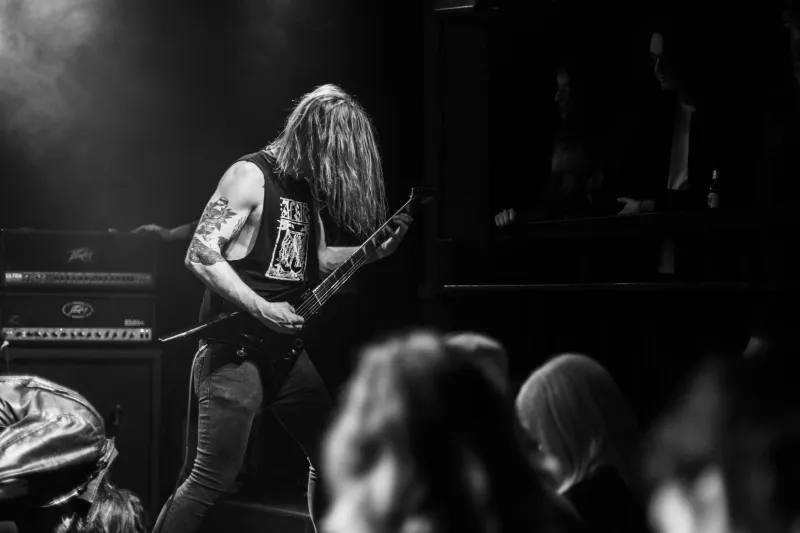
No Permission Needed: How Punk and Metal Artists Are Burning Down the Label System and Building Something Better
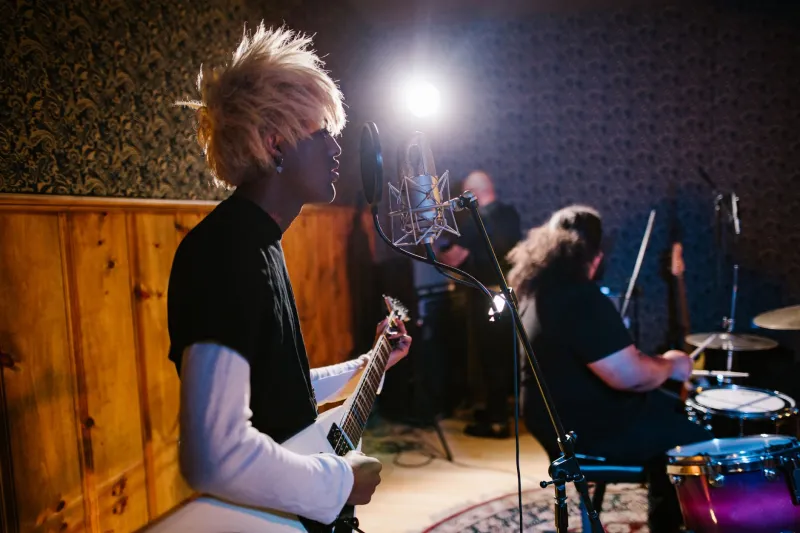
There's a particular kind of arrogance that lives inside the major label machine. It's the arrogance of gatekeepers — people who decided, for decades, which music was worthy of your ears and which bands would die in obscurity because they didn't fit a spreadsheet. That machine is sputtering. The gears are grinding. And the artists who were supposed to beg at its door? They stopped knocking a long time ago.
Welcome to the new counterculture economy, where a 22-year-old with a laptop, a Bandcamp account, and a loyal Discord server can out-earn a mid-tier major label signee without surrendering a single percentage point of their creative soul.
The A&R Myth Is Dead — It Just Doesn't Know It Yet
For most of the 20th century, Artists and Repertoire — A&R — departments functioned as the music industry's immune system, deciding what was safe enough to release into the mainstream. They discovered talent, sure. But they also crushed it, reshaped it, and homogenized it until it was palatable enough for commercial radio and retail shelves.
The punk explosion of the '70s tried to burn that system down. It didn't finish the job. The metal underground of the '80s built parallel networks through tape trading and zines — but eventually, major labels absorbed enough of those artists to maintain control. Grunge, nu-metal, post-hardcore — every counterculture wave eventually got swallowed.
But something different is happening now. The tools that were supposed to make artists dependent on labels — recording technology, distribution infrastructure, marketing reach — have been democratized so thoroughly that the label's core value proposition has essentially collapsed.
"I had three labels approach me in 2021," says Marcus Veil, the frontman of Chicago-based post-punk outfit Throat Static, speaking over the phone between tour dates. "One of them wanted to own my masters, take 80% of merch revenue, and 'consult' on my image. I told them I was already doing better numbers on Spotify than their current roster's average. They didn't have an answer for that."
Veil's band has built a following of over 340,000 monthly Spotify listeners without a single label dollar behind them. Their last album was recorded in a converted garage in Pilsen, mixed by a friend, and released through DistroKid. It charted on three independent metal charts. The band keeps nearly everything they earn.
Direct-to-Fan Isn't Just a Strategy — It's a Philosophy
What separates today's successful independent artists from the DIY bands of previous generations isn't just technology. It's a fundamental shift in how artists think about their relationship with listeners.
Bandcamp, Patreon, Substack, and platforms like Kickstarter have allowed bands to transform passive fans into active stakeholders. When a punk band launches a Patreon offering early album access, handwritten lyric sheets, and monthly Q&A sessions, they're not just generating revenue — they're building a community that has genuine skin in the game.
Portland experimental metal duo Grave Cartography ran a Kickstarter last year to fund their third LP. They set a goal of $18,000. They raised $61,000 in 23 days. Their backers ranged from longtime fans in Oregon to first-time listeners in Germany who found them through a TikTok clip of their vocalist screaming through a broken PA at a house show.
"The label model is built on scarcity and control," says the duo's drummer, who goes by Sable. "They control what gets made, when it comes out, how it's marketed. Our model is the opposite. We tell our people exactly what we're doing, why we're doing it, and they show up. That's not a business relationship. That's something closer to a movement."
Social Media: The New College Radio
If college radio was the underground distribution network of the '80s and '90s — the place where bands like Hüsker Dü and Sonic Youth built cult followings before anyone in a major market paid attention — then TikTok, Instagram Reels, and YouTube Shorts are its chaotic, algorithm-driven successor.
The difference is reach. A college radio station in Athens, Georgia might hit 50,000 listeners on a good night. A 45-second clip of a band absolutely destroying a venue in Denton, Texas can hit 4 million views in 72 hours if the algorithm decides it's having a moment.
That virality is unpredictable, maddening, and occasionally miraculous. Indie hardcore band Split Teeth went from playing 80-cap venues in Philadelphia to selling out 1,200-seat rooms across the East Coast after a clip of their guitarist snapping a string mid-riff and finishing the song anyway went viral on TikTok. They had no label. No PR firm. No budget. Just a moment of raw authenticity that resonated with a generation raised on curated inauthenticity.
Why the Old Guard Is Scrambling
Major labels aren't blind. They've watched this shift happening in real time, and their response has been characteristically clumsy — signing TikTok-famous artists to deals that often feel more like acquisition attempts than artistic partnerships, then watching those artists stagnate once the label's machinery gets involved.
The deeper problem is structural. Labels are built around the concept of recoupable advances — giving artists money upfront and then clawing it back through royalty deductions before the artist sees a dime of profit. For an independent artist already generating sustainable income, that arrangement is a trap, not an opportunity.
"Why would I take a $150,000 advance and owe them a million dollars in recoupable costs when I can raise $60,000 directly from my fans and own everything outright?" asks Veil. "The math doesn't work in the label's favor anymore. And they know it."
What labels still offer — promotional muscle, sync licensing relationships, physical distribution infrastructure — matters less with every passing year. Sync licensing deals are increasingly accessible through independent music supervisors. Physical distribution, while still valuable, represents a shrinking slice of overall revenue. And promotional muscle is increasingly replaceable by a savvy social media strategy and a publicist who actually understands underground music.
The Empire Builders
The most interesting independent artists right now aren't just making music — they're constructing ecosystems. Merchandise lines that function as actual fashion brands. Podcast networks. Record labels of their own, signing other independent artists and pooling resources. Zines, both digital and physical. Touring collectives that share costs and cross-pollinate fan bases.
This is the counterculture economy at its most evolved. It's not anti-capitalist in the naive sense — these artists want to eat, pay rent, and keep making music. But it operates outside the extractive logic of corporate entertainment, redistributing value back toward the people actually creating the culture.
The major labels built their empires on the assumption that artists needed them more than they needed the artists. That assumption has been exposed as the lie it always was.
The door is open. Nobody's guarding it anymore. And the kids who used to stand outside, waiting for permission?
They already walked through.