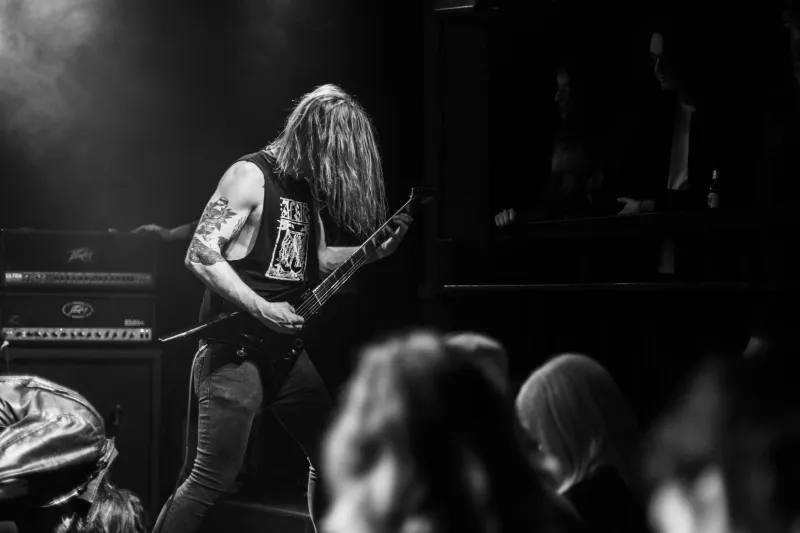
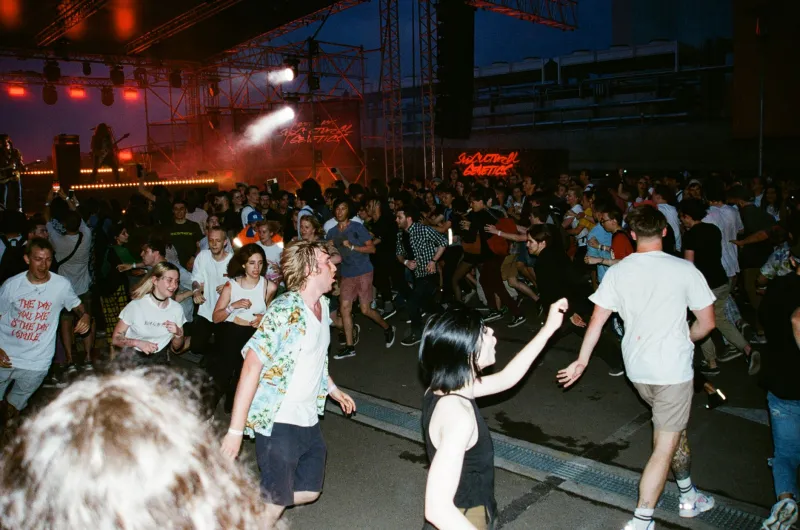
Scream and Melody: How Extreme Music Learned to Write a Hook Without Losing Its Teeth

Let's get one thing out of the way immediately: writing a catchy chorus doesn't make you a coward.
I know. I know. There's a significant portion of the extreme music faithful who just tensed up reading that sentence. Who grew up in scenes where melody was viewed with deep suspicion, where accessibility was code for compromise, and where the highest compliment you could pay a band was that they were uncommercial — as though financial failure were itself a form of artistic integrity. Those scenes produced some of the most important, vital, genuinely dangerous music ever made. They also produced a lot of insufferable gatekeeping that kept heavy music locked in a room talking to itself for twenty years.
Something is changing. You can feel it in the records, hear it in the conversations, see it in the streaming numbers. Extreme metal and punk — real, teeth-baring, confrontational extreme music — is rediscovering the hook. Not the watered-down, radio-friendly hook of a band that got a major label advance and a producer with a Malibu address. The other kind. The kind that burrows into your skull at 2 a.m. and won't leave until you've played the song four more times.
And the underground is having an absolute meltdown about it.
Where the Shift Is Coming From
You can trace threads of this back further than people want to admit. The melodic hardcore explosion of the late '90s and early 2000s proved that you could write a song with genuine emotional resonance without abandoning aggression. Bands like Converge, Refused, and Poison the Well were writing some of the most devastating music of their generation while also — and this is the part the purists conveniently forget — writing parts that got stuck in your head.
But the current wave feels different in scope and intentionality. Acts like Spiritbox, Knocked Loose, and Military Genius aren't accidentally stumbling into melody. They're building toward it. The hook isn't a concession — it's a weapon. It's the part of the song that makes the brutality hit harder by contrast, that gives the listener something to hold onto while the rest of the track tries to drown them.
Knocked Loose's You Won't Go Before You're Supposed To is probably the most discussed example in this conversation right now, and for good reason. Bryan Garris has always been a ferocious vocalist, but the album's willingness to lean into genuine melody — to let a chorus breathe and mean something — felt like a band discovering a new dimension of itself. The record didn't sacrifice one ounce of heaviness. It just added another layer that made people who'd never touched hardcore suddenly feel like the songs were written specifically for them.
That's not selling out. That's mastery.
The Purist Backlash Is Real and Also Kind of Hilarious
Predictably, not everyone is celebrating. The discourse online — and in zines, in comment sections, in the parking lots of venues across America — has gotten heated. There's a genuine contingent of heavy music fans who view the melody resurgence as a Trojan horse, a first step toward the kind of mainstream dilution that turned grunge into adult contemporary within a decade.
The concern isn't entirely irrational. Music history is littered with scenes that opened the door to accessibility and watched the whole thing get swallowed by commercial machinery that had no interest in what made the music meaningful in the first place. The major label industrial complex has a well-documented talent for finding the most interesting thing in underground culture and sanding it into a product.
But here's where the purist argument falls apart: the bands writing the best melodic extreme music right now aren't doing it because a label told them to. They're doing it because it's where the songs are leading them. There's a significant difference between a band that gets signed and suddenly discovers melody and a band that's been playing the same riff for eight years and decides to let the chorus actually land for once.
Also — and I say this with full respect for the underground — some of the most beloved extreme records of all time have enormous, undeniable hooks in them. Pantera's Vulgar Display of Power is basically a hook delivery machine wrapped in enough aggression to make you forget it. Black Flag wrote songs that got stuck in your head. The Misfits wrote pop songs about horror movies and nobody's calling Glenn Danzig a sellout. The selective memory around this stuff is exhausting.
What the Best of It Actually Sounds Like
The bands threading this needle most successfully right now share a specific quality: they're not treating melody and extremity as opposing forces to be balanced. They're treating them as the same force expressed differently.
When Spiritbox builds a track from a crushing, dissonant riff into a clean, soaring chorus, the effect isn't that the song gets softer. The effect is that the song gets bigger. The contrast creates emotional stakes. You feel the heaviness more acutely because you've been given something beautiful to lose.
That's not a new idea — it's the basic architecture of effective songwriting going back centuries. What's new is watching extreme music fully embrace it without apology, without the self-conscious hedging that used to surround any conversation about accessibility in these genres.
Punk is doing something similar, though through a different door. Bands like PUP and Jeff Rosenstock have been writing anthemic, fist-in-the-air choruses for years now, and the scene has largely accepted them as legitimate precisely because the anger underneath the melody is so obviously real. The hook doesn't soften the message — it amplifies it. A room full of people screaming a chorus together is a more powerful political act than a room full of people nodding at a breakdown.
Evolution, Not Compromise
Here's the take this publication is prepared to stand behind: the return of the hook in extreme music isn't a warning sign. It's a sign that the genre is mature enough to stop being afraid of its own emotional range.
Heavy music has always been about intensity. For a long time, intensity meant exclusively loud, fast, and inaccessible — and that produced extraordinary work. But intensity also means the kind of melody that hits you so hard you feel it in your sternum. It means a chorus that makes you feel less alone at 3 a.m. It means art that's so precisely aimed at the human nervous system that you can't escape it.
The bands writing that music right now aren't compromising anything. They're expanding what extreme music is capable of.
You can still hate it if you want. That's punk too.