The Floor Is Gone: America's Punk and Metal Venues Are Dying and Nobody Is Building the Replacement
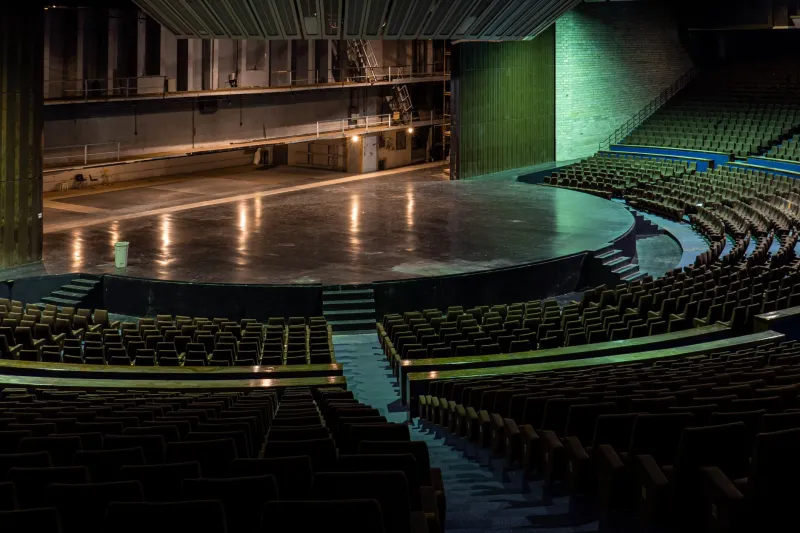
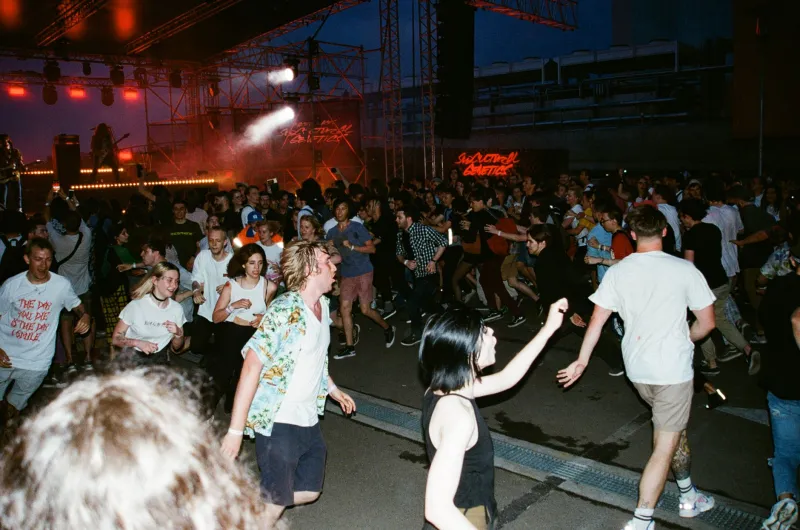
I want you to think about the first show that actually mattered to you. Not a festival, not a stadium, not a livestream. A room. Probably a room that smelled bad. Probably a room with a sound system that was held together with zip ties and optimism. A room where you stood close enough to the stage that the bass physically moved your ribcage and you had to lean in to hear the person next to you.
That room is probably gone now.
And if it isn't gone yet, give it eighteen months.
The Numbers Don't Lie, Even When the Industry Does
The closure rate for independent music venues in the United States has been catastrophic and largely unreported outside of local news cycles that nobody outside the immediate scene reads. According to the National Independent Venue Association, the pandemic wiped out roughly 90% of venues' revenue overnight in 2020, and hundreds of them simply never reopened. The ones that survived did so on emergency relief funds and the goodwill of landlords who, in most cases, have since remembered that real estate is more profitable than punk shows.
The problem didn't start with COVID and it didn't end with it. It started with the broader economic cannibalization of American cities — the same gentrification machine that turned every interesting neighborhood in every interesting city into a collection of high-end apartments and dog grooming boutiques. Venues exist in spaces that become valuable, and when spaces become valuable, venues get evicted.
The Smell in Los Angeles. The Vera Project in Seattle (still hanging on, but barely). Countless DIY spaces in Chicago, Richmond, Louisville, and every mid-size city that used to have a real scene. Gone or going. The geography of underground music is being systematically erased.
What a Venue Actually Is (And Why You Can't Stream It)
Here's what gets lost in the conversation about digital alternatives: a venue isn't just a place to watch music. It's a social infrastructure. It's where you find your people before you know they're your people. It's where the band you've never heard of convinces you they're the most important thing happening, and you tell three friends the next day, and two of those friends come to the next show, and suddenly there's a scene where there wasn't one before.
You cannot replicate that on Twitch. You cannot replicate it in a Discord server. These things are valuable — I'm not dismissing them — but they are not the same thing. A livestream of a show is to a show what a photograph of food is to dinner. It documents the thing. It is not the thing.
The physical gathering is where scenes develop their identity. It's where the weird local band that doesn't fit any genre finds out they have a crowd. It's where the 17-year-old kid who feels completely alien in their hometown realizes there are 200 other people who feel the same way and they're all in this room right now. That recognition — that specific, physical, you-are-not-alone recognition — is what heavy music venues have always provided, and it is irreplaceable by any digital means currently available.
The DIY Response and Its Honest Limitations
The underground has always self-organized when institutions failed it. Warehouse shows, basement circuits, VFW halls, church basements — the DIY network is real and it's kept scenes alive in places that never had proper venues to begin with. Places like Omaha, Boise, and Chattanooga have thriving underground scenes built entirely on informal spaces and word-of-mouth booking, and that's genuinely inspiring.
But let's be honest about what the DIY network can and can't do. It can support local scenes. It can give emerging bands a place to develop. It cannot, in most cases, support touring bands trying to build a national audience. It cannot offer the kind of capacity that creates the economic conditions for a band to actually sustain itself financially. A 50-person basement show is beautiful. It is not a career path.
The mid-size venue — the 300 to 1,500 capacity room — was the rung on the ladder between basement shows and arenas. It's where bands went from local secret to regional force. It's where the scene's economy actually functioned. And that rung is being kicked out from under everyone.
Hybrid Experiments and Genuine Hope
Some cities are trying things. Venue collectives in Philadelphia and Detroit have experimented with shared ownership models that distribute financial risk across multiple stakeholders. A few cities have pushed for cultural venue preservation ordinances that give independent music spaces some protection against rapid displacement. These are real efforts by real people and they deserve support.
Virtual reality concerts have been attempted by everyone from major labels to indie collectives, with mixed results. The technology isn't there yet for it to feel like anything other than a novelty, and the scenes that need solutions most — the ones in economically depressed regions where venues are closing without any replacement — are also the ones with the least access to the tech infrastructure virtual spaces require.
The most promising experiments are the most unglamorous ones: cities where underground communities have collectively purchased or long-term-leased spaces, turning venues from commercial operations into community assets. It's slow. It's hard. It requires an organizational infrastructure that most DIY scenes aren't built to maintain. But it's the only model that actually addresses the root problem, which is that venues operating on commercial real estate in appreciating markets are structurally doomed.
What We're Really Losing
When a venue closes, it doesn't just take the calendar with it. It takes the bartender who let the touring band sleep in the back room. It takes the sound engineer who taught herself on that specific system and knew how to make the room sound good. It takes the institutional memory of every band that played there, every scene that formed around it, every person who had their first real experience of belonging inside those walls.
You can build a new room. You cannot rebuild what happened in the old one.
Heavy music has survived a lot. It's survived moral panics and industry neglect and the internet dismantling every economic model that kept it running. But it has always survived because it had physical places where it could exist as a community rather than just a consumer category.
Right now, those places are going away. And the urgency of that loss is not being matched by the scale of the response.