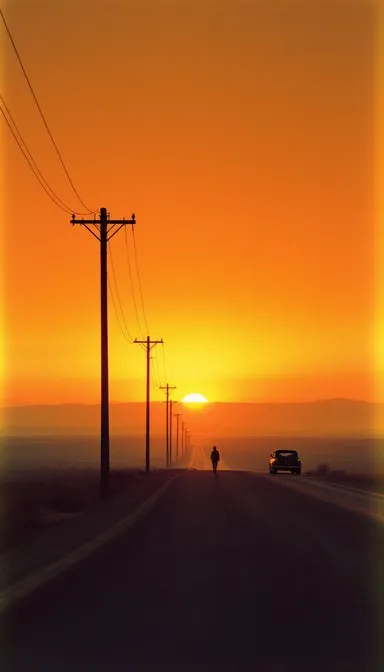
The Crowd Gave You Everything. Monday Morning Takes It All Back.
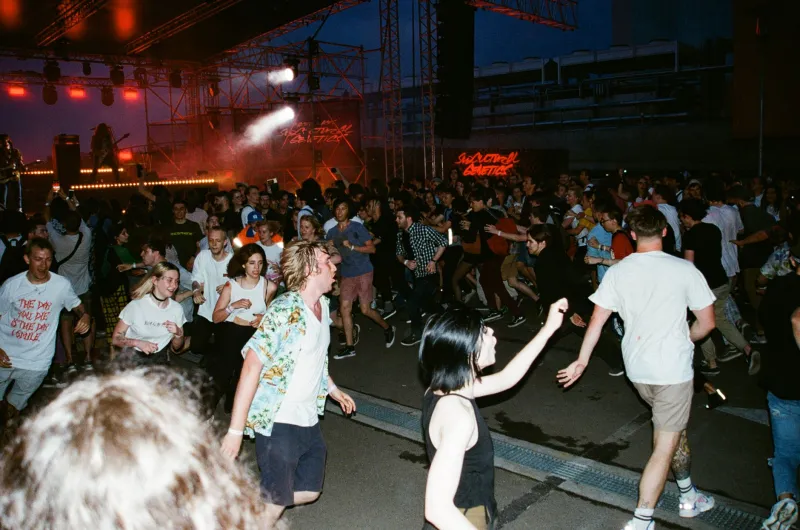
You know the exact moment. The set ends. The house lights come up too fast, too bright, too honest. The crowd that was one organism thirty seconds ago starts dissolving into individual people again, shuffling toward exits, checking phones, re-entering the world. And somewhere in your chest there's this small, specific grief — not about the show being over, exactly. About having to leave the only place that ever felt like it was built for you.
If you've felt that, you already understand what this piece is about.
What Actually Happens in That Room
The science of collective emotional experience at live music events is real and well-documented, but it undersells what's actually happening at a metal or hardcore show. Yes, there are endorphins. Yes, synchronized movement with other bodies creates measurable psychological bonding. Yes, loud music at high volumes triggers physiological responses that mimic states of altered consciousness.
But that's not the whole story.
The whole story is that most heavy music fans spend the majority of their lives in environments that are, at best, indifferent to who they are. At work. In family settings. In social situations where the music they love, the way they dress, the emotional register they operate in — all of it reads as alien or threatening or just weird to the people around them. The low-grade friction of that is exhausting in a way that's hard to articulate unless you've lived it.
Then you walk into a venue where everyone around you chose to be there for the exact same reason you did. The music starts. And that friction just... stops.
That's not a small thing. That's a lifeline.
The Specific Loneliness of Loving Music Nobody Around You Understands
There's a particular kind of isolation that comes from having a deep, identity-level relationship with music that exists outside the mainstream. It's not just about taste. It's about the way heavy music — the brutal, the extreme, the ugly and transcendent — becomes a private language for processing things that don't have polite vocabulary.
Depression. Rage. Grief. The specific American exhaustion of trying to function in a society that often feels designed to grind you down. Heavy music gives those experiences a form. A container. A sound that says yes, this is real, you're not broken for feeling it.
When you try to share that with people who don't get it, you get looks. You get jokes. You get the slightly concerned "you should listen to something more positive" conversation that manages to be both dismissive and condescending at the same time. So you stop trying to share it. You carry it alone. And the shows become the only place where you don't have to.
The 48-Hour Cycle
Talk to enough heavy music fans about this and a pattern emerges. Show announced: immediate lift, something to look forward to, a fixed point in the future that makes the intervening weeks more bearable. Day of show: anticipatory energy, the ritual of getting ready, the drive or the train ride, the smell of the venue before it fills up. During the set: transcendence, full stop.
And then the 48 hours after.
Some people describe it as a crash, though that word implies something chemical and quick. It's slower than that. It's the gradual return of everything the show temporarily suspended. The awareness of the job you hate, the relationships that don't quite fit, the sense that the version of yourself that exists in that pit is more real than the one that shows up everywhere else — and that version only gets a few hours a month.
That's the loneliness paradox. The show doesn't solve the isolation. It illuminates it. It shows you exactly what connection feels like, which makes its absence afterward sharper and more specific.
What Fans Do Between Gigs
The communities that form around heavy music — online forums, local scenes, the group chats that form after shows — are partly a response to exactly this. They're attempts to extend the feeling. To maintain some thread of the collective experience across the stretches of ordinary life that separate shows.
And they work, imperfectly. The Discord server at 2 a.m. when you can't sleep and someone else is also awake and also listening to the same record for the fourth time. The friend you made at a show three years ago who you'd never have met any other way. The comment section under a live video where strangers are describing the same moment you experienced from across the room.
It's not the same as the room. Nothing is. But it's not nothing.
The Mainstream World Doesn't Owe You Anything and That's the Problem
Here's the hard part. The isolation that heavy music fans feel isn't irrational or self-imposed. American mainstream culture is genuinely hostile to the emotional register that this music operates in. Loudness, darkness, aggression, grief worn openly — these aren't qualities that get rewarded in most professional or social contexts. The culture asks you to be manageable. Palatable. To keep the volume down.
Heavy music is a sustained refusal of that request. Which is exactly why it matters. And exactly why the people who need it most often feel most alone in their need.
The show gives you a few hours inside a world where the refusal is collective. Where the volume is the point. Where the darkness isn't something to apologize for but something to share.
Monday morning will come. The walls will be back. But you were in that room. And for a little while, you weren't alone in any of it.