Stranded in the Cornfield: How America's Hardcore Faithful Survive the Musical Wasteland
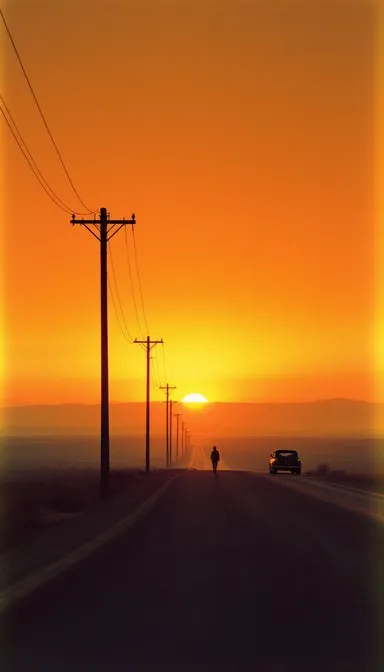
Photo: lone figure rural road listening to music headphones empty highway midwest, via images.stockcake.com
There's a particular kind of loneliness that no therapy app and no wellness influencer will ever understand. It's the loneliness of being sixteen years old in Grundy County, Tennessee — or Custer County, Nebraska, or literally anywhere in the vast agricultural silence between American coasts — with a worn-out copy of a Converge record and absolutely zero human beings within driving distance who give a damn.
This isn't a sob story. It's actually kind of a superhero origin.
The heavy music world has spent decades worshipping at the altar of urban scenes — Chicago basements, Detroit warehouses, Los Angeles backyard shows, New York lofts that smell like mold and ambition. And those scenes are real and they matter. But there's a parallel universe of devotion happening out in the dead zones, the music deserts, the small towns where the closest thing to a venue is a VFW hall that books country covers on Friday nights. Out there, something different gets forged. Something rawer. Something that doesn't have the luxury of being casual about it.
You Can't Be a Poser When There's No Scene to Perform For
Here's the thing about discovering heavy music in a place that doesn't have any: you can't fake it for social currency. There's no clout to chase. Nobody's watching. You're not wearing that Eyehategod shirt to impress anyone at a show — you're wearing it because it's the only honest thing in your wardrobe and the town you live in genuinely cannot process what it means.
That strips away an entire layer of performance that urban scene culture sometimes can't escape. When you're the only metalhead in a three-county radius, your relationship with the music becomes almost embarrassingly pure. It's not about being seen at the right shows or name-dropping the right obscure bands. It's about survival in the most dramatic and completely sincere sense of the word.
Fans who grew up in these dead zones talk about it like a private religion. Hours spent on dial-up internet in the early 2000s, tracking down obscure releases. Driving two-plus hours to the nearest city with an actual record store that stocked anything heavier than Nickelback. Burning CDs for themselves because there was nobody else to trade with. The isolation didn't dilute the obsession — it concentrated it into something almost frightening.
The Internet Didn't Just Help. It Saved Lives.
Long before TikTok algorithms were spitting Knocked Loose clips at teenagers in Iowa, forums and message boards were functioning as genuine lifelines for isolated heavy music fans. Last.fm communities, Metal Archives rabbit holes, early subreddits, Myspace pages for bands from places you'd never heard of — these weren't just entertainment. They were proof that you weren't alone, that the thing you felt when the music hit wasn't some personal malfunction.
Today the infrastructure is more sophisticated but the function is identical. Discord servers for regional scenes that technically don't have enough people in them to constitute a scene. Facebook groups where someone in rural Montana is asking if anyone wants to carpool six hours to a show in Salt Lake City. Subreddits dedicated to specific subgenres where a kid in western Kansas is getting recommendations from someone in Finland at two in the morning.
The internet didn't create this community. It gave an existing hunger somewhere to go.
And the hunger is ferocious. Studies consistently show that fans who discover niche music without peer reinforcement tend to develop deeper, more encyclopedic relationships with that music. When you can't talk to anyone about it in person, you internalize everything. You become the archivist of your own obsession. Rural heavy music fans are disproportionately represented among the people who actually know the full discography, who can trace the lineage of a genre back through three decades of obscure splits and demo tapes.
Pilgrimage Culture Is Real and It's Sacred
Ask any metal or punk devotee who grew up in a small town about their first real show and watch their face change. It's not nostalgia exactly — it's closer to the way people describe religious experiences. Because getting to that show required sacrifice. It required planning and saving and convincing someone to drive and probably lying to a parent about where you were going.
The road-trip-to-see-a-show tradition in heavy music is ancient and deeply American, and it's disproportionately practiced by fans who don't have local options. Driving four hours to catch a touring package at a mid-size club in the nearest metro area. Sleeping in a car in a parking garage because a hotel wasn't in the budget. Eating gas station food for two days because the ticket and the gas ate the whole paycheck.
This is not hyperbole. This is Tuesday for a significant chunk of heavy music's most dedicated audience.
And there's a community ritual built around it — the carpool, the pre-show playlist, the post-show debrief on the drive home at midnight, the way the whole experience gets sealed in memory with an intensity that people who can walk to a venue on any given weekend simply don't accumulate. Distance creates reverence. Inconvenience creates meaning.
Being the Only One Is Its Own Kind of Power
There's a narrative that positions geographic isolation as a disadvantage for music fans, and in practical terms it obviously is. You miss shows. You miss the social fabric of a real scene. You miss the accidental discoveries that come from hanging around people who are as deep into this stuff as you are.
But there's another reading of it that the people who lived it understand viscerally: being the only one makes you the keeper of the flame.
In a town where nobody else cares, you become the ambassador. You're the person who introduces a younger kid to something that breaks their brain open. You're the one who drives the van when a touring band needs a local contact willing to book a house show in a market that doesn't exist on any promoter's radar. You become, almost by default, the infrastructure for something that didn't exist before you showed up.
The DIY ethic that defines punk and metal at their best didn't get invented in cities. It got refined there, sure. But the spirit of building something from nothing because nothing exists yet — that's a rural instinct. That's what happens when you want something badly enough and the system has decided your zip code doesn't deserve it.
The Dead Zone Is a State of Mind
Heavy music has always been for the people the mainstream forgot to include. That's not a marketing line — it's the actual historical record. The genres that live under this umbrella were built by and for people who felt like outsiders, who needed music that matched the volume of what they were feeling inside and couldn't find it anywhere polite society was pointing.
Rural isolation is just a geographic expression of something that millions of heavy music fans feel regardless of where they live. You can be surrounded by people in a major city and still be the only person in the room who actually gets it. The dead zone is real. It's also a state of mind.
The metalheads stranded in the cornfields, the punk kids in the mountain towns, the hardcore devotees three hours from the nearest show — they're not the fringe of this culture. They might be its truest center. They're the ones who never had the option of being casual about it.
And that's exactly why they're still here.