Your Favorite Band Is Your Whole Personality and Honestly? We Respect the Commitment
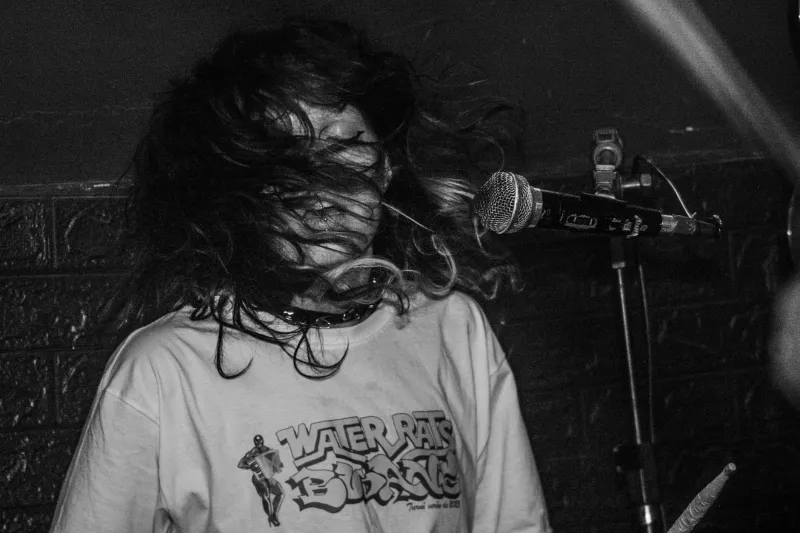
There's a kid somewhere in Ohio right now — maybe Cleveland, maybe Columbus, doesn't matter — who has spent the last four months hand-painting a denim jacket covered in patches from a band that hasn't released a record since 2009 and has maybe 11,000 monthly Spotify listeners. He knows every demo. He's tracked down three different bootleg recordings from a 2006 basement show in Dayton. He's made his own shirt because the band never sold merch. He is, by any conventional metric, completely unhinged.
He is also, by our metric, doing something genuinely beautiful.
Heavy music has always attracted this kind of devotion. Punk, metal, hardcore — these aren't genres you casually enjoy at a dinner party. They're genres that reach into your chest and rearrange things. And when something rearranges you that thoroughly, you don't just listen. You become. You build an identity around it, a wardrobe, a social circle, a worldview. You stop being a fan and start being a participant.
The question worth asking in 2024 isn't whether this intensity is healthy. It's what it means now that the intensity has an economy.
From the Pit to the Marketplace
Fan culture in heavy music has always had a DIY commercial undercurrent. Bootleg cassettes at record stores. Hand-dubbed VHS tapes traded through zine networks. Unofficial shirts sold out of car trunks at shows. None of this is new. What's new is the infrastructure.
Etsy, Depop, Instagram shops, Redbubble — the platforms have professionalized what used to be pure chaos. Fans who once made a single custom piece for themselves are now running actual side businesses. Some of them are making real money. A quick scroll through Etsy will surface dozens of shops selling hand-painted portraits of Converge's Jacob Bannon, embroidered patches of Neurosis album art, resin-cast pendants shaped like the Deftones' Chino Moreno's silhouette.
This is where things get complicated, and where the heavy music community tends to fracture into two loud camps.
Camp one: fan creation is tribute. It's love made tangible. When a band can't or won't produce something, the fans fill the void. They're keeping the culture alive, circulating the art, expanding the mythology. The band should be flattered.
Camp two: fan creation is extraction. It's profiting off someone else's brand, their imagery, their labor. Even if the intent is pure, the money isn't going to the artist. In a genre where most bands are already operating on financial fumes, that matters.
Both camps are right. That's the uncomfortable part.
The Parasocial Pit
Let's talk about the emotional architecture underneath all of this, because the economics are almost a distraction from the real story.
Extreme music fandoms are parasocial relationships cranked to eleven. The artists aren't just musicians — they're confessors, mirrors, surrogate friends. When a vocalist screams something that sounds exactly like the thing you couldn't say at seventeen, you don't experience that as entertainment. You experience it as recognition. As rescue, even.
That's not a bug. That's the entire point of the music.
But parasocial relationships, by definition, are asymmetrical. The fan knows the artist. The artist doesn't know the fan. And in heavy music, where the mythology of authenticity runs so deep — where we expect our artists to be real in ways that pop stars aren't — that asymmetry can curdle into something weird.
We've all seen it. The fan who interprets every lyric as a personal message. The Discord server that functions more like a cult than a community. The person who has genuinely restructured their entire life around an artist's release schedule and tour calendar, who feels personally betrayed when a band changes direction or breaks up, as if the artists owe them something for the devotion.
This isn't unique to heavy music, but it hits different here. Because heavy music asks for so much of you emotionally, the investment feels more total. And when something takes everything you've got, it's hard not to feel like you own a piece of it.
Battle Jackets as Biography
Step back from the pathology for a second, though, because there's something genuinely radical happening in the creative output of heavy music's most obsessed fans.
The battle jacket — that denim or leather vest covered in patches, studs, and paint — is maybe the most underappreciated art form in American youth culture. Every jacket is a hand-assembled autobiography. A visual record of who you were when you discovered a band, who you became because of them, what you survived with their records playing. These aren't fashion statements. They're documents.
Same goes for the zine makers, the fan photographers who've shot a thousand shows on film cameras, the people who run meticulous archival Tumblrs preserving setlists and flyers from tours that most of the world forgot happened. These are archivists. Historians. They're doing preservation work that no label and no algorithm is going to do.
When Integrity or Eyehategod or Acid Bath don't have a comprehensive visual archive, it's usually a fan who built one. When a rare pressing surfaces with context — who played that night, what the room felt like, which songs didn't make the setlist — it's a fan who documented it. The line between devotion and scholarship gets thin real fast.
When Loving a Band Becomes Your Business Model
Here's where we land, and we're not going to pretend it's clean.
Fan creation exists on a spectrum. At one end: a teenager making one patch for their own jacket, zero profit, pure love. At the other end: someone running a shop doing hundreds of dollars a month in sales off another artist's intellectual property without permission or compensation. The first one is unambiguously fine. The second one is, legally and ethically, a harder conversation.
The heavy music community needs to hold both truths. Fan culture is what keeps underground scenes breathing when the industry won't. Fan creation is legitimate artistic expression. And also — artists deserve compensation for their work, especially when their margins are already razor-thin and the people selling their imagery are profiting without cutting them in.
The solution isn't to police fan creativity into oblivion. It's for fans and artists to actually talk to each other — something the parasocial nature of the relationship makes weirdly difficult, but not impossible. Some bands have leaned into it brilliantly, officially blessing fan merch networks, collaborating with fan artists, turning the obsession into a genuine two-way exchange.
That's the version of this we want to see more of. Not the sanitized, corporate-approved fan experience. The messy, reciprocal, alive version — where the people who love the music most are treated like the community members they are, not just a revenue stream or a passive audience.
That kid in Ohio with the hand-painted jacket? He's not a problem to be managed. He's proof the music still matters.
Act accordingly.