Playing Broken: The Heavy Music Artists Living With Chronic Illness While the Industry Demands They Pretend Otherwise
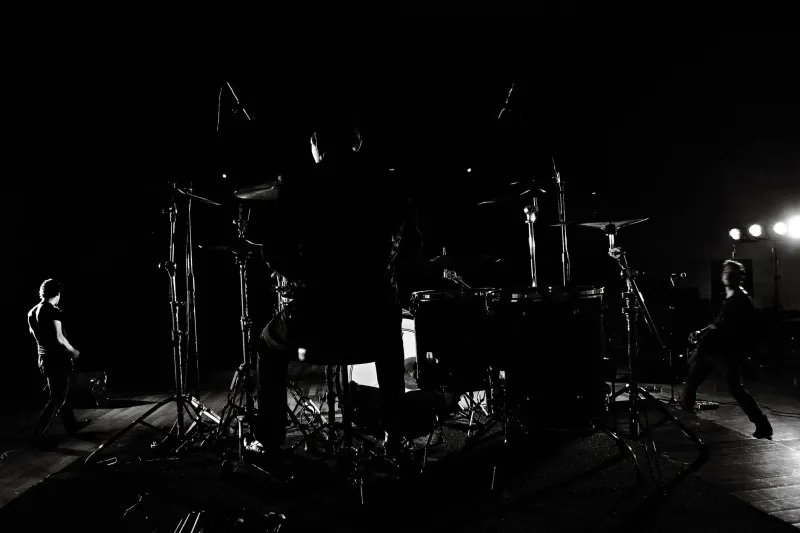
The mythology of the heavy music performer is built on endurance. You play through the pain. You finish the tour. You don't cancel unless you literally cannot stand up, and even then, you apologize to the fans before you apologize to your body. This mythology has produced some genuinely transcendent performances — the kind where you can feel the cost in every note — and it has also quietly destroyed people who deserved better from the communities that claimed to love them.
Chronic illness doesn't care about tour routing. Autoimmune flares don't check the festival calendar. Degenerative joint conditions don't pause for a sold-out run. And the heavy music industry, which prides itself on its authenticity and its rejection of mainstream values, has managed to build a care infrastructure that is, in most respects, worse than the corporate music world it supposedly despises.
The Specific Brutality of Heavy Music's Physical Demands
Every genre is physically demanding in its own way, but heavy music has a particular relationship with the body that other genres don't. Drummers in metal and hardcore are performing at athletic intensities for 45 to 90 minutes a night, often multiple nights in a row with minimal recovery time. Vocalists doing extreme techniques — screaming, growling, shrieking — are putting stresses on their larynx that most ear, nose, and throat specialists will tell you are genuinely unsustainable over long periods without careful management. Guitarists and bassists develop repetitive strain injuries at rates that would alarm occupational health researchers if anyone in the music industry cared enough to study them systematically.
Layer a chronic condition on top of that baseline, and the math gets ugly fast.
Fibromyalgia, rheumatoid arthritis, Crohn's disease, lupus, Ehlers-Danlos syndrome, severe depression, bipolar disorder, PTSD — these are not rare conditions in the general population, and there's no particular reason to believe musicians are less susceptible to them than anyone else. What's different is that musicians face them in an environment that offers almost no structural support and carries enormous cultural stigma around admitting physical or mental limitation.
"I Played the Whole Tour Not Knowing What Was Wrong With Me"
The testimonies, when artists feel safe enough to share them, are genuinely difficult to read.
One guitarist from a mid-tier metal act based in the Pacific Northwest, who agreed to speak on the condition of anonymity, described finishing a 34-date run while managing an undiagnosed autoimmune condition that had been causing joint inflammation severe enough to affect her playing. "I didn't tell the band until after the tour because I was afraid they'd replace me," she said. "I was taking ibuprofen like it was candy and icing my hands every night. By the end I couldn't make a fist in the morning until about noon. I thought that was just what touring was."
It's not just physical conditions. A vocalist from a prominent East Coast hardcore act who has spoken publicly about his bipolar II diagnosis described the particular horror of managing mood episodes on the road without consistent access to mental healthcare. "When you're home, you have your psychiatrist, you have your routine, you have your safety net. On tour, you have none of that. You're sleeping in a van, eating gas station food, performing at maximum intensity every night, and you're supposed to somehow maintain the medication schedule and the sleep hygiene and the everything else that keeps you functional. It's not possible. You just manage the crisis when it comes."
The 'Suffer Through It' Code and Where It Came From
The cultural expectation that heavy music artists push through physical and mental crises without complaint didn't emerge from nowhere. It's downstream of a broader working-class masculinity that has always defined a significant strand of the genre — the idea that complaining about pain is weakness, that the show going on is a moral obligation, that audiences who paid for tickets are owed performance regardless of what it costs the performer.
This value system has real roots in real solidarity. The musicians who built hardcore and metal in American basements and VFW halls in the 1980s and 1990s genuinely did operate on zero margin, and the ability to push through adversity was genuinely necessary for survival. But somewhere along the way, survival necessity calcified into cultural law, and the people who get hurt by that law are disproportionately the ones who were already most vulnerable — artists with chronic conditions, artists from working-class backgrounds without health insurance, artists whose mental health struggles make the performance-at-any-cost expectation not just difficult but actively dangerous.
Where the Cracks Are Showing
Something is shifting, though. It's slow and uneven and still carries stigma, but more artists are talking about this publicly than at any point in heavy music's history.
The pandemic-era cancellations — which forced the entire industry to develop language around "health and safety" that had never existed before — cracked open a conversation that has been hard to fully close. Artists who canceled shows in 2020 and 2021 for health reasons discovered that the sky did not fall, that fans were largely understanding, and that the taboo around saying "I can't do this right now" was less ironclad than they'd believed.
Organizations like Sweet Relief Musicians Fund have provided emergency financial support to artists dealing with medical crises for years, but awareness of these resources in the heavy music community has historically been low. That's starting to change as more artists share their experiences publicly and point their communities toward existing infrastructure.
The mental health conversation has moved even faster. Bands openly discussing depression, anxiety, and trauma in their lyrics and in interviews has become increasingly common in heavy music spaces, and that visibility creates permission for fans and fellow artists to be more honest about their own struggles.
What the Industry Actually Owes These Artists
Talking about chronic illness in heavy music is necessary, but talking isn't enough. The structural problems require structural solutions.
Tour support contracts that build in genuine recovery time rather than treating rest days as lost revenue opportunities. Health insurance infrastructure for touring musicians — something that organizations like the Recording Academy have advocated for but that remains inaccessible to most independent artists. Mental health resources that travel with tours rather than requiring artists to maintain care relationships they can't access from the road. Cancellation policies that don't penalize artists financially for medical emergencies.
None of this is radical. All of it requires the industry to treat musicians as human beings with bodies and minds that have limits, rather than as output machines that should run until they don't.
Heavy music has always been about honesty. About saying the thing that's true even when it's uncomfortable, even when it costs you something. The artists playing broken night after night deserve that same honesty from the industry that profits from their pain.
They're not machines. They never were. It's time the scene stopped pretending otherwise.