Cash in the Pit: How Underground Bands Turned Merch Tables Into Middle Fingers at the Music Industry
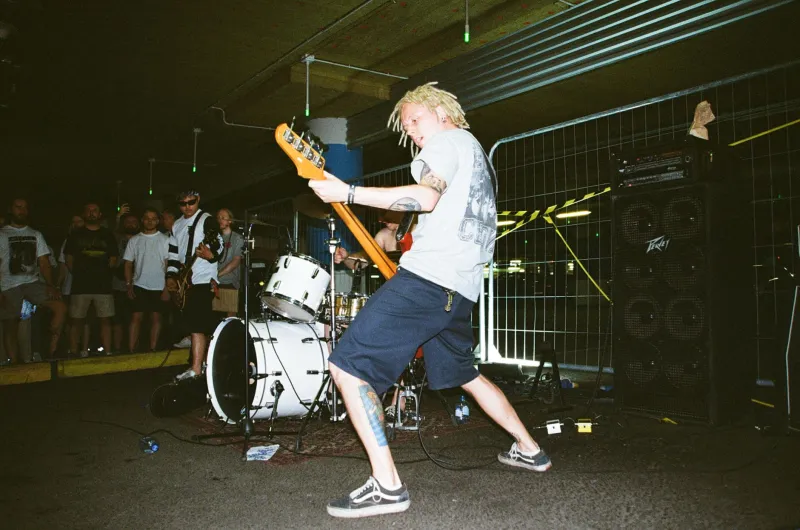
There's a specific kind of magic that happens at a merch table after a sweaty, violent, transcendent heavy music set. People are still buzzing. Their ears are ringing. They just witnessed something that felt like it was made specifically for them — and they will spend money to hold onto that feeling. A t-shirt. A patch. A hand-numbered cassette run of 100 that they know will be gone by the end of the night. That transaction isn't just commerce. It's a covenant.
And corporate labels? They have absolutely no idea what to do with it.
The Old Model Is a Corpse and Nobody's Crying
For decades, the music industry ran on a simple, extractive equation: label fronts the money, label owns the masters, label takes the lion's share of revenue, and the artist gets a percentage that barely covers rent. Even when it "worked," it mostly worked for everyone except the people actually making the music.
Then streaming gutted the already-thin margins. Spotify pays out somewhere between $0.003 and $0.005 per stream. Do the math on what a band with 50,000 monthly listeners actually takes home. It's humiliating. The major label machine responded by doubling down on pop, on algorithm-friendly content, on anything that could be packaged and fed to playlists without friction.
Heavy music — loud, abrasive, uncommercial by design — got quietly shown the door.
Fine. The door was a cage anyway.
Bandcamp Is the Most Important Thing to Happen to Underground Music in 20 Years
Bandcamp doesn't get enough credit, and that's partially because the people who use it most don't spend a lot of time writing think pieces about it. They're too busy releasing splits, uploading demo tapes, and watching the actual money hit their accounts.
The platform's revenue split — artists keep roughly 80 to 85 percent of sales after payment processing — is so far ahead of anything the streaming world offers that it barely belongs in the same conversation. Bandcamp Fridays, which began during the pandemic and saw the platform waive its cut entirely, became a genuine economic lifeline for underground artists. Fans showed up. Not because an algorithm told them to. Because they wanted to.
That's the psychological engine underneath all of this. Heavy music fans are not passive consumers. They are active, obsessive, fiercely loyal participants in a culture that they feel ownership over. When a band they love puts out a limited vinyl pressing or a hand-sewn patch set, the purchase isn't impulsive in a mindless way — it's intentional. It's an act of community membership. Labels never understood that because labels always thought they were selling a product. They weren't. They were selling belonging, and they kept most of the profit.
The Van Is the Business Plan
Talk to any working underground band in the US right now — the ones playing 200-cap rooms in secondary markets, the ones who've built genuine regional followings without a single playlist placement — and they'll tell you the same thing. Touring pays. Not touring in the arena sense, not the kind with tour buses and production riders. The other kind. The brutal, romantic, sustainable kind where you load your own gear, sleep on floors, and hit every mid-sized city that a major label wouldn't bother with.
Places like Richmond, Albuquerque, Boise, Knoxville. Cities with hungry scenes and fans who haven't been given enough of this music and will absolutely buy the shirt and the record and the zine if you show up and deliver.
The grassroots touring network that's evolved in heavy music over the past decade is genuinely sophisticated. Bands book through DIY promoters with regional reputations. They split costs with other bands on the bill. They use social media not to go viral but to maintain direct relationships with the 300 people in each city who will come out every single time. That's not a massive audience. It's a reliable one. And reliable is the thing that actually keeps the lights on.
Authenticity Has a Price Tag and It's Higher Than You'd Think
Here's the part that confuses people outside of heavy music culture: the more raw and uncompromising a band seems, the more their fans are willing to spend on them. This isn't a paradox. It's the whole point.
When a band operates completely outside the commercial system — no label, no radio, no sync deals, no sponsored content — every purchase from a fan is a direct vote of confidence. There's no middleman skimming the meaning out of it. The $25 tee bought at the merch table goes directly to keeping that band on the road. Fans know this. They feel it. And they respond accordingly.
Limited runs, handmade elements, exclusive tour variants — these aren't just marketing tactics. They're signals. They say: this exists because we made it, and you're one of the people who gives enough of a damn to own it. That's a more powerful sales pitch than anything a major label's marketing department has ever produced.
The Industry's Last Move
The corporate response to all of this has been predictably clumsy. Labels have tried to get into merch deals, demanding a cut of merchandise revenue as part of so-called "360 deals" that effectively monetize every revenue stream an artist has. Some bands signed those deals out of desperation and spent years regretting it.
The smarter play — the one more and more heavy artists are making — is to never need the deal in the first place. Build the audience through touring and direct engagement. Sell the merch yourself. Keep the Bandcamp. Own the mailing list. Treat every fan like the irreplaceable economic and emotional relationship that they actually are.
The major label model assumes scarcity of access — that fans need the label as a gatekeeper to reach the music. That assumption died somewhere between Napster and the first iPhone. Underground heavy music just took longer to fully internalize the opportunity that created.
Now it has. And the merch tables are bleeding money in the best possible way.