Blood Thicker Than the Pit: How Metal and Punk Are Raising America's Loneliest Kids
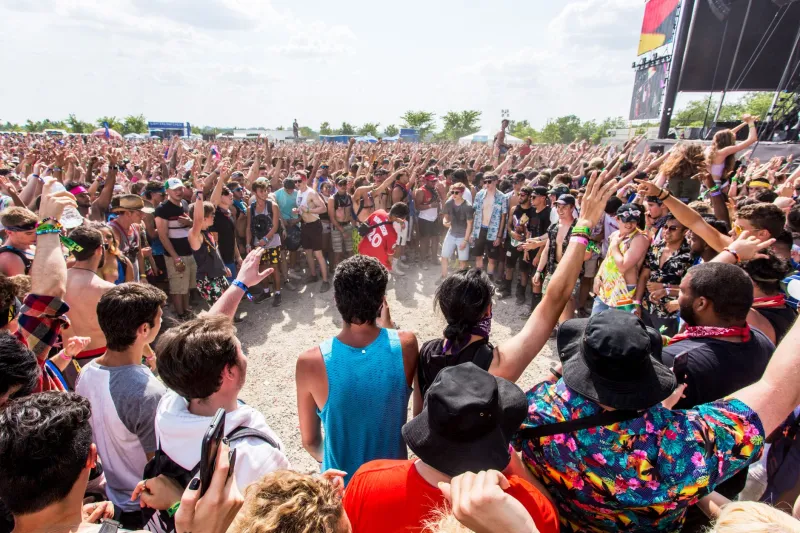
There's a moment every veteran of the heavy music scene knows. You're at a show — maybe a 200-cap room that smells like spilled PBR and old carpet — and a stranger catches you mid-fall in the pit, hauls you upright, and gives you a nod before diving back in. Nobody exchanged numbers. Nobody asked your name. But something passed between you that most people spend entire lifetimes chasing in churches and therapy offices and group chats that go quiet after a week.
That moment is the whole thing. That's what we're talking about.
America is drowning in a loneliness epidemic that the Surgeon General officially declared a public health crisis in 2023. Social media promised connection and delivered performance. Mainstream fandoms — the stadium pop worlds, the stan armies — offer parasocial intensity that evaporates the second the algorithm serves up someone new. But the communities forming around metal, punk, and hardcore? Those bonds are different. Ugly, loud, and built to last.
The Mainstream Fandom Problem
Here's what a mainstream music fandom looks like in 2025: you stream the album on repeat, you post a take, you defend the artist from strangers, and you perform your devotion for an audience that's doing the same thing back at you. It's a mirror hall of engagement metrics masquerading as community. The moment the artist pivots — drops a collab, shifts their sound, goes quiet — the whole structure collapses like a tent with no stakes.
Heavy music fandoms don't work that way. They can't. The music itself is too demanding. You don't stumble into a Converge show and perform enthusiasm for the Gram. You either get it in your chest or you don't. That filtering mechanism — brutal, unintentional, and completely effective — means the people who stay are the people who need to stay.
And a lot of them needed it badly.
Discord Servers and the New Basement Show
Ask around in any serious metal or punk Discord server and you'll find the same story told a hundred different ways. Kids in rural Ohio with no scene nearby, adults in red states who don't fit anywhere, veterans with PTSD who found Neurosis before they found a counselor. These aren't casual listeners. They're survivors who found the music before they found each other, and then built entire lives around both.
Jake, 28, from outside Knoxville, Tennessee, found a blackened hardcore Discord server in 2020 during lockdown. "I hadn't left my apartment in three weeks," he says. "I was genuinely not okay. I posted about a record I was obsessed with — Oathbreaker's Rheia — and within an hour I had four people in my DMs just... talking to me. Not about the record. About everything." Three of those people flew to see a show with him in Atlanta two years later. One was a groomsman at his wedding.
That's not an anomaly. That's the pattern.
Marisa, 34, from Phoenix, has been running a local punk community Facebook group for six years that's evolved into something closer to a mutual aid network. "We started sharing show listings," she says. "Now we share job leads, crash space, rides to the hospital. Last year we crowdfunded rent for a member who got evicted. This is family. These are my people in a way my actual biological family never figured out how to be."
Why Heavy Music Creates What Mainstream Culture Can't
The answer isn't mystical. It's structural. Heavy music, by its nature, asks something of you. It asks you to be present, to be physical, to be honest about pain. The lyrical content of hardcore, doom, black metal — it doesn't do comfort. It does truth. And people who are drawn to truth-telling tend to be people who've been lied to, who've been isolated, who've had to build their own frameworks for surviving.
When you find someone else who chose the same brutal soundtrack, you're not just sharing taste. You're recognizing each other's damage. That recognition is the foundation of every real relationship that's ever existed.
Mosh pits, specifically, do something that almost no other social ritual in America replicates: they make physical care between strangers completely normal. You hit the floor, someone lifts you. You're the one who lifts the next person. There's no transaction. There's no social media post about it. It just happens, over and over, until it becomes instinct. You carry that instinct out of the venue and into the rest of your life.
The Chosen Family Isn't Soft — It's Survival
Let's be clear about something: this isn't a warm-and-fuzzy story about the power of music bringing people together. This is a story about people who had nowhere else to go finding somewhere to be. It's about chosen family as a survival strategy in a country that has systematically dismantled every other support structure — mental health care, affordable housing, functional communities, religious institutions that don't demand ideological conformity.
Heavy music didn't set out to fill those gaps. But it did. And the communities built around it are some of the most resilient, most genuinely caring, most fiercely loyal social structures operating in America right now.
That's not an accident. That's what happens when people who've been failed by every official system build something themselves. It looks like a Discord server about doom metal. It looks like a group of punks crowdfunding someone's rent. It looks like a stranger's hand hauling you off the floor at a show in a city you've never been to before.
It looks like family. Because that's exactly what it is.