Buried by the Bot: How Spotify's Recommendation Engine Turned Into Heavy Music's Most Powerful Gatekeeper
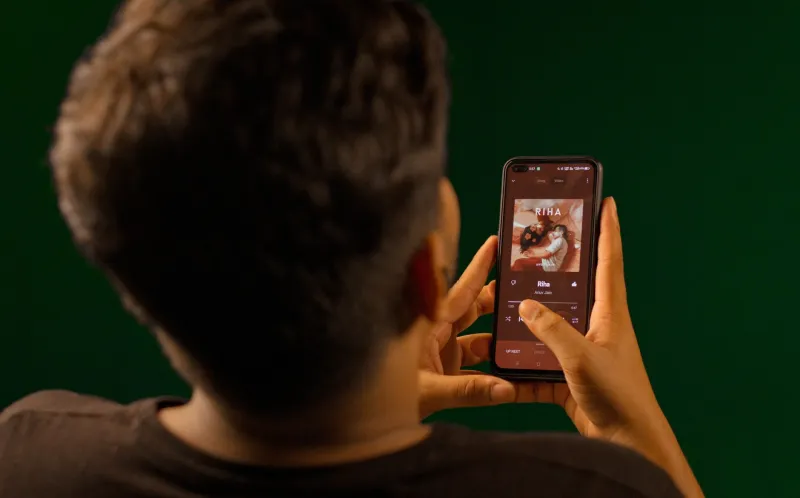
Remember when streaming was supposed to be the great equalizer? The pitch was seductive: no more relying on MTV, no more radio programmers deciding what got heard, no more label budgets determining who broke through. Just music, listeners, and the invisible hand of data connecting them. For a minute there, it felt like the underground might actually win.
That minute is over.
Spotify's discovery infrastructure — the algorithmic machinery behind Discover Weekly, Radio, and its editorial playlists — has quietly become one of the most consequential gatekeepers in the history of heavy music. And unlike the old gatekeepers, this one doesn't have a face you can argue with, a phone number you can call, or a conscience you can appeal to. It's a recommendation engine optimized for engagement metrics, and heavy music's most loyal, most passionate listeners are getting systematically funneled away from the artists who actually deserve their attention.
How the Algorithm Decides What Heavy Is
Spotify's recommendation system is built on a combination of collaborative filtering (what people who listen to similar things also listen to) and audio feature analysis (tempo, energy, danceability, and other measurable sonic characteristics). On paper, this sounds like it should work fine for metal and hardcore. High energy, high tempo, distinct audio signatures — these genres should be easy to identify and cluster.
The problem is what happens at the edges of those clusters. When the system is looking for "similar" artists to recommend to a fan of, say, Code Orange or Portrayal of Guilt, it doesn't just search within the underground. It searches across its entire catalog for songs with comparable audio features and strong engagement metrics. And engagement metrics — completion rates, playlist adds, saves — skew heavily toward accessibility. A Bring Me the Horizon track with 40 million streams looks like a much safer recommendation than a Vein.fm deep cut with 80,000, even if the fan in question would genuinely prefer the latter.
The result is a gravitational pull toward the mainstream that nobody explicitly programmed but that emerges inevitably from the incentive structure. Underground artists don't just compete with each other for discovery — they compete with every polished, radio-adjacent act that shares their general sonic neighborhood.
The Playlist Problem
Editorial playlists are where the disparity becomes impossible to ignore. Spotify's most powerful heavy music playlists — Metal Essentials, Headbangers, Heavy Queens — function as de facto tastemaking tools that can meaningfully move listener numbers. Getting placed on one of these lists can sustain a mid-level act for months. Not getting placed can mean invisibility.
The criteria for editorial placement are opaque by design, but patterns are visible. A 2023 analysis by music data platform Chartmetric found that the top 50 most-streamed acts on Spotify's flagship metal playlists were dominated by acts with major label affiliations or significant independent distribution deals with companies like DistroKid's TuneCore or CD Baby's upper-tier services. Genuinely DIY acts — bands releasing music through Bandcamp or self-distributed through direct distributor agreements — represented less than 8 percent of total playlist placement across the platform's core heavy music editorial offerings.
Independent artists have noticed. "We released our last record to the best response we've ever had from press and from our existing fans," says one vocalist from a Chicago-based blackened hardcore act who asked to remain anonymous due to ongoing label negotiations. "Our Spotify numbers barely moved. The algorithm just didn't pick it up. Meanwhile, a band that sounds like a watered-down version of us with a management deal got added to three playlists in the first week."
The Crossover Funnel
Perhaps the most insidious effect of algorithmic gatekeeping is what it does to listener taste over time. Spotify's recommendation engine isn't static — it learns from user behavior and continuously adjusts. If a fan of underground metal keeps getting served crossover recommendations and occasionally engages with them (even just because nothing better is being offered), the system interprets that engagement as a signal and doubles down.
Over months and years, this creates a gradual drift. Fans who started with Converge and Integrity end up in a playlist neighborhood that looks a lot more like Spiritbox and Bad Omens — not because they chose that trajectory, but because the algorithm chose it for them, optimizing for the engagement it could most easily capture rather than the discovery it could most meaningfully facilitate.
This isn't a conspiracy. Nobody at Spotify is sitting in a room deciding that underground hardcore should be suppressed. But the effect is real, and the people absorbing the cost are the artists and fans who built heavy music's most vital creative ecosystems from the ground up.
What Artists Are Actually Doing
The underground's response has been characteristically self-reliant. Bandcamp remains the platform of choice for artists who want direct relationships with their most dedicated listeners, even as Bandcamp's parent company situation continues to create uncertainty. Newsletters, direct-to-fan email lists, and Discord servers have become infrastructure for artists who can't count on algorithmic amplification.
Some acts have gotten strategic about Spotify without surrendering to it. Understanding how the platform's pitch system works — submitting tracks for editorial consideration at least seven days before release, building pre-save campaigns to generate early engagement signals — has helped certain DIY artists game the system's margins. It's not a solution, but it's survival.
Label collectives and genre-specific independent distributors have also started advocating more aggressively for playlist placement on behalf of their rosters, essentially building the kind of industry relationships that major labels have always had but that underground acts historically lacked access to.
The Deeper Failure
None of this changes the fundamental problem, which is that a platform with 600 million users has enormous power over what music gets heard and has built its discovery architecture around metrics that systematically disadvantage the artists who need discovery most. The fans are there. The music is there. The algorithm is just pointing everyone in the wrong direction.
Heavy music's most loyal listeners didn't come to the genre looking for easy. They came looking for real. The least Spotify could do is trust them to find it.